


College Successfully Hosts the 8th International Conference on Data Science and Information Technology
From November 14 to 16, 2025, the 8th IEEE International Conference on Data Science and Information Technology (DSIT 2025), organized by Beijing Technology and Business University and hosted by its College of Computing and Artificial Intelligence, was successfully held. The conference brought together experts and scholars from around the world in the fields of data science and information technology to explore cutting-edge technologies and innovative applications within the discipline.
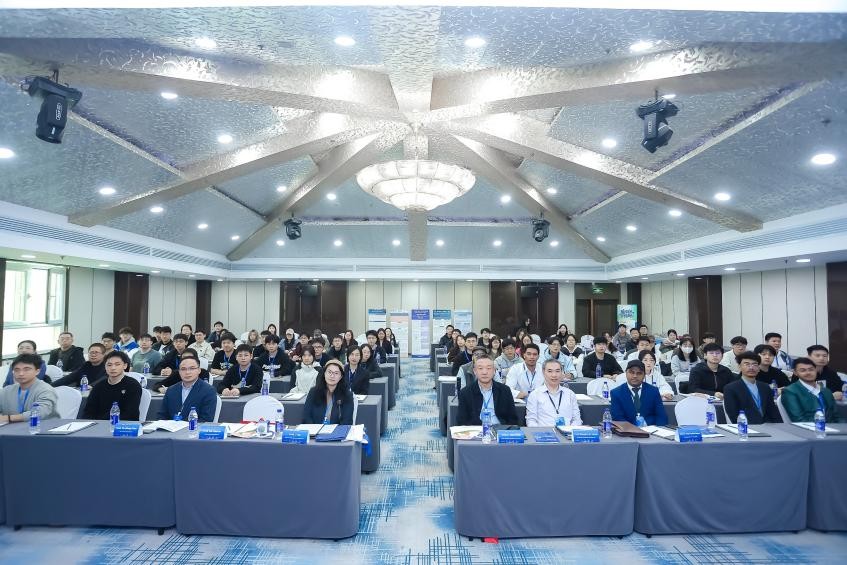
Professor Li Haisheng, Executive Dean of the College of Computing and Artificial Intelligence at Beijing Technology and Business University, presided over the welcome and opening ceremony. Professor Li warmly welcomed all the distinguished guests and scholars who had traveled from afar, emphasizing the importance of deepening international collaboration and interdisciplinary exchanges in driving the advancement of the field during the era of data explosion. He expressed his hope that the conference would serve as a high-level academic feast that inspires ideas and fosters cooperation.
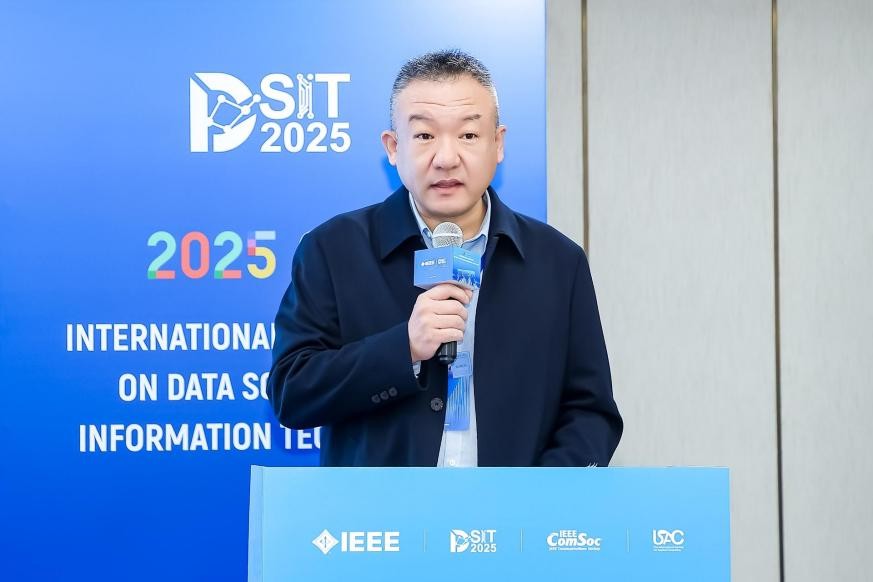
The conference invited several renowned scholars from home and abroad to deliver keynote speeches, with each session chaired by Professor Tan Li, Vice Dean of the College of Computing and Artificial Intelligence at Beijing Technology and Business University.
Professor Xie Haoran from Lingnan University Hong Kong delivered a keynote address titled “From Context to Cognition: Large Language Models for Interpretable and Human-Aligned Sentiment Analysis.” In his presentation, he explored how to advance sentiment analysis in large language models beyond simple polarity classification, moving toward contextualized, cognitive, and interpretable understanding. By integrating reasoning, structure, and interpretability, he discussed building a bridge between human cognition and machine comprehension.
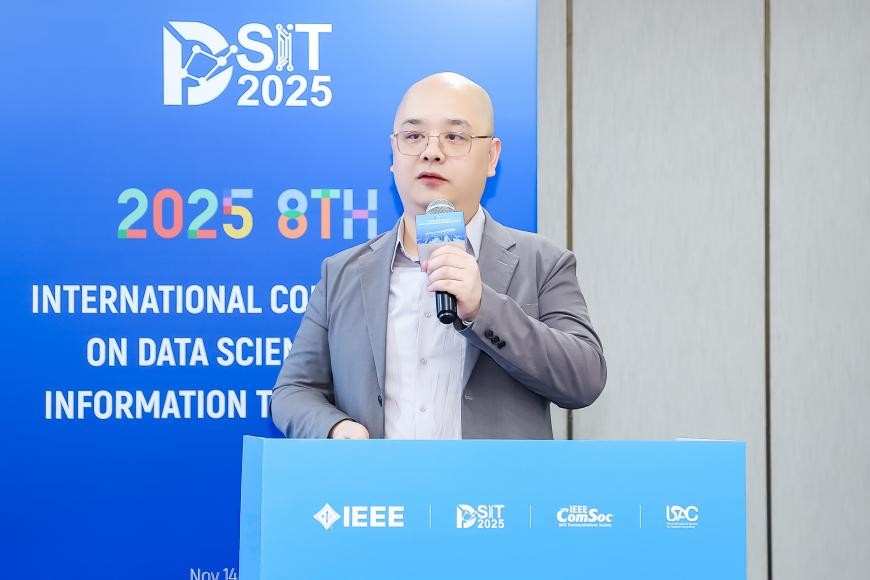
Professor Zheng Zhengang from the University of Hong Kong delivered a keynote speech titled "Graph Data Science for Social Good: STAR Lab's Experience." He shared how his team leverages data science technologies, particularly heterogeneous information network techniques, to develop the mutual aid service platform HINCare. This initiative aims to address human resource shortages in social service sectors such as elderly care. He also discussed the practical experience of the platform in supporting non-governmental organizations and service users.
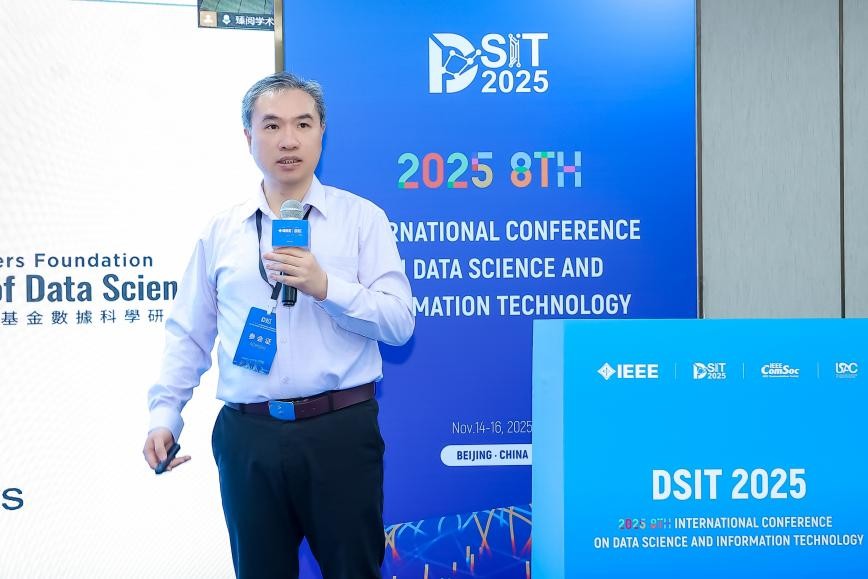
Professor Azhar Imran from Beijing University of Technology delivered a keynote speech titled "Computational Intelligence in Healthcare: Hope vs. Hype." In his presentation, he provided an in-depth analysis of the revolutionary potential of computational intelligence in medical diagnosis, treatment, and personalized healthcare, while also addressing the challenges it faces. These include data biases, model interpretability, ethical concerns, and limitations in clinical validation. He emphasized the importance of building transparent, compliant, and human-centered AI systems for healthcare.
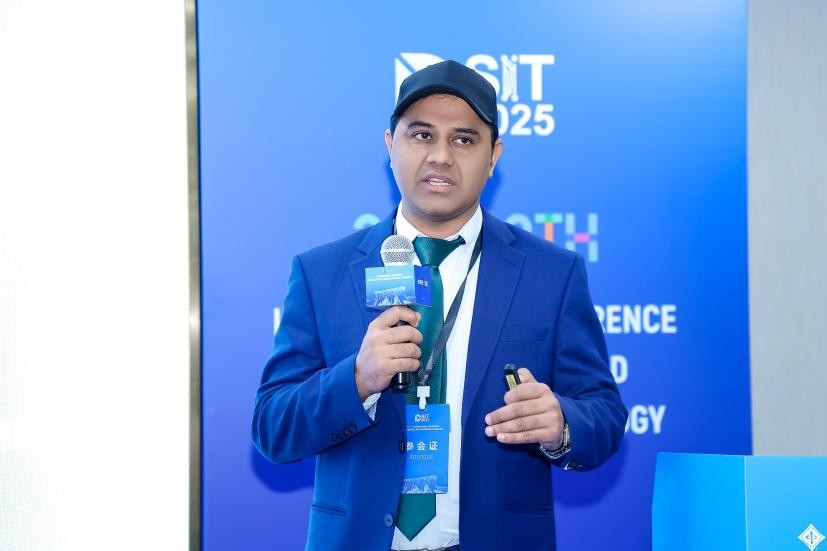
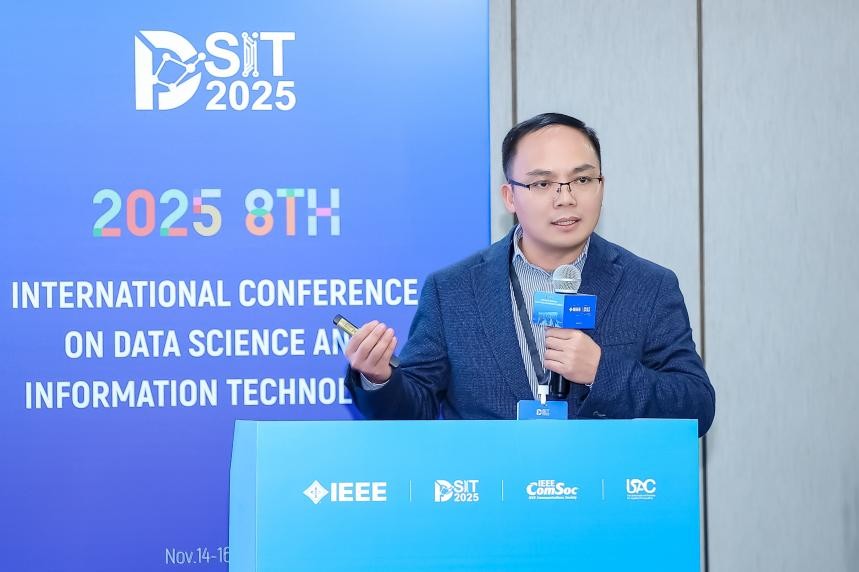
Professor Chen Yuwang from the University of Manchester delivered a keynote speech titled "Data-Driven Decision Making in Social Networks." He elaborated on the comprehensive framework developed by his research team for modeling and analyzing decision-making and behaviors within social communities. This framework explores how individual decision-makers form beliefs, interact, and update their viewpoints, ultimately influencing group opinion dynamics and decision outcomes.
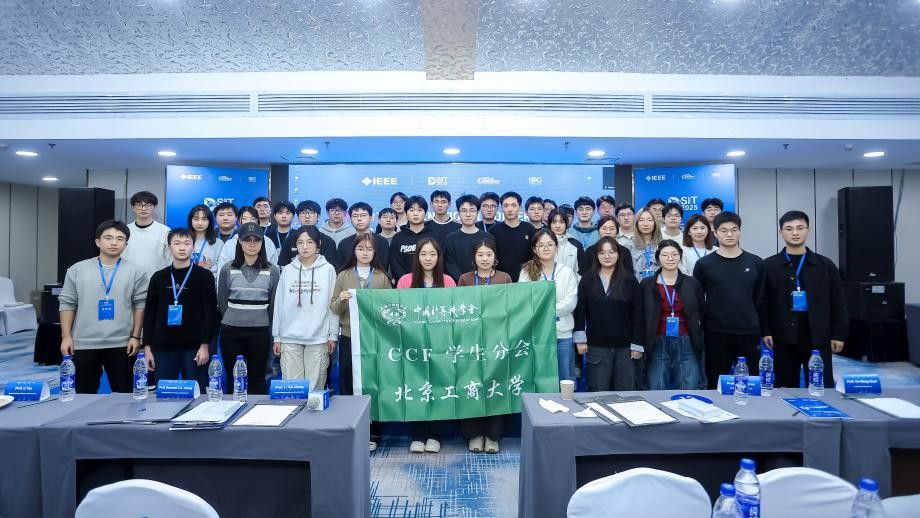
To promote academic exchange and talent cultivation, the CBF Student Branch of Beijing Technology and Business University organized students from the College of Computing and Artificial Intelligence to participate in the conference and carry out related volunteer services. The students attentively listened to the academic presentations and actively engaged in discussions, demonstrating a strong interest in research and a positive attitude toward learning. Their involvement infused the conference with youthful energy and vitality.
This conference provided a high-quality platform for academic dialogue among global scholars through its top-tier keynote speeches, rigorous paper reviews and presentations, as well as diverse exchange activities. It effectively fostered international communication and collaborative innovation in the fields of data science and information technology.